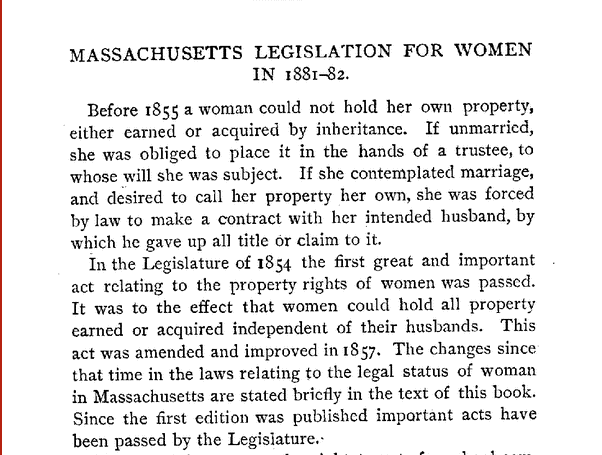
1854 -
The Massachusetts legislature enacts a Married
Women's Property Act at the prodding of feminist Mary Ferrin (née
Upton), 44, who has been petitioning the lawmakers since 1848 and
gaining support for the measure from able men and likeminded women. The
law gives control of their property to women who marry after the law
takes effect, empowers a wife to make a will without her husband's
consent (except as it applies to one half her personal property), and
gives her certain fixed rights in the estate of her husband should he
die
intestate.
(Samuel E. Sewall (1799-1888), lawyer and reformer, was one of the
founders of the New England Anti-Slavery Society in 1831. He was
elected to the Senate as a Free-Soiler and drafted the bill giving
married women the right to hold property, which later became law. - from
Daughter of Boston: The Extraordinary life of Caroline Healey Dall)
1854 Mary Upton Ferrin succeeded in getting the
Massachusetts legislature to enact a Married Women's Property Act to
protect a woman's property and make her own will.
http://www.madisonvoices.com/womenshistory/timeline.htm
Resolved, That the laws of property, as affecting married parties,
demand a thorough revisal, so that all rights may be equal between them;
-- that the wife may have, during life, an equal control over the
property gained by their mutual toil and sacrifices, be heir to her
husband precisely to the extent that he is heir to her, and entitled, at
her death, to dispose by will of the same share of the joint property as
he is.
http://lcweb2.loc.gov/cgi-bin/query/r?ammem/naw:@field(DOCID+@lit(rbnawsan8286div7)):
Does it not compel her to take
off the crown of her womanhood, and lay it at man's feet? No; give
her her right to the disposal of her own property, to the disposal
of her own earnings. As a wife, do not compel her to explain all her
needs to one who can scarcely apprehend them from his want of
attention to her situation and comforts, but let her have an equal
right to the disposal of her earnings, equal privileges with man to
acquire, hold, and manage property. The rightfulness of this is
beginning to be felt and acknowledged. Laws have been recently
passed by many of the States, giving to wives the right to control
property owned before marriage; and would it not be equally just to
give to them also some well protected rights regarding what they may
save and acquire by a faithful discharge of their duties as wives
and heads of families.
